Knowledge
Retatrutide Dosage
Mar
Retatrutide Dosage | Retatrutide Dosage Calculator
Retatrutide Dosage, Retatrutide Dosage Calculator. Eli Lilly created the experimental medication retatrutide, which has shown great promise in the treatment of type 2 diabetes and obesity. Because it is a triple receptor agonist (GLP-1, GIP, and glucagon), unlike current treatments, its dosage strategy is very crucial for striking a balance between efficacy and tolerance. There is currently no FDA-approved dosage for the medication because it is still undergoing clinical research, but trial results offer helpful information about how it is used and what patients can anticipate.
Dosage in Clinical Trials
- Formulation: Retatrutide is given as a once-weekly subcutaneous injection.
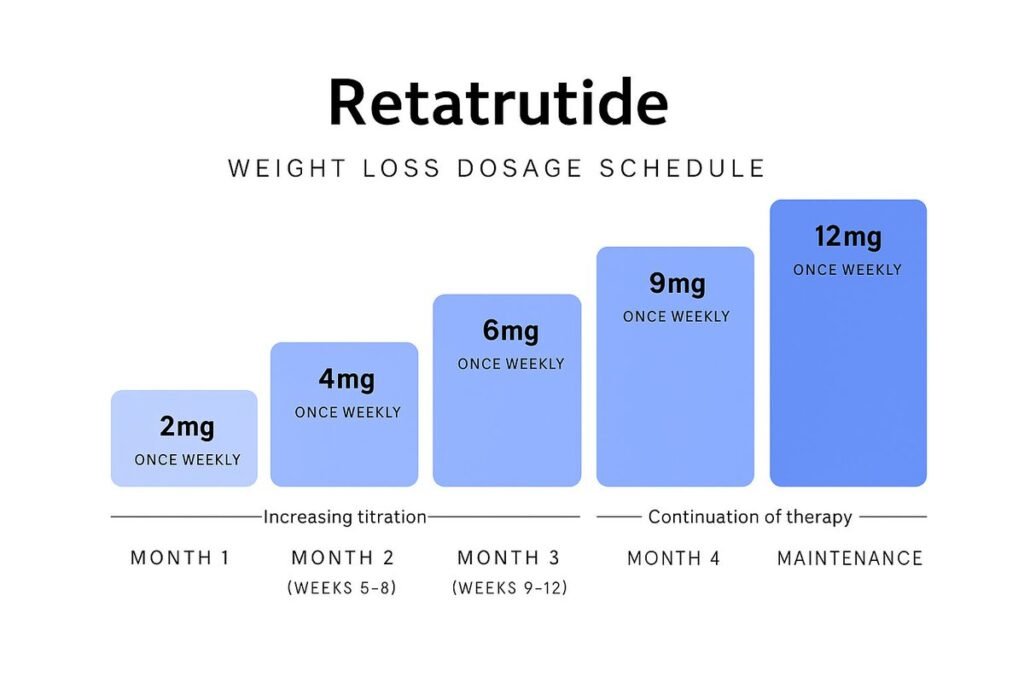
- Dose Range Studied: Clinical trials have tested doses from 1 mg up to 12 mg weekly.
- Titration Strategy: Participants usually begin at a low dose (1-2 mg) and progressively increase every four weeks until they reach the goal dose in order to reduce gastrointestinal side effects.
- Optimal Dose: The greatest weight loss (up to 24–28% body weight reduction) was achieved with larger doses (8–12 mg), but there was also a higher incidence of nausea, vomiting, and dysesthesia (tingling feelings).
Side Effect Considerations by Dose
- Low Doses (1–4 mg): less severe weight loss, but better tolerated and with fewer GI problems.
- Moderate Doses (6–8 mg): Efficacy and tolerability were balanced, and many subjects lost double digits of weight.
- High Doses (10–12 mg): maximum effectiveness but the highest rates of dysesthesia (20.9%), nausea (up to 60%), and vomiting (26%).
Comparison with Mounjaro (Tirzepatide)
- Mounjaro Dosage: FDA-approved at 5 mg, 10 mg, and 15 mg weekly with gradual titration.
- Retatrutide vs. Mounjaro: The dosage approach for retatrutide is similar, but because of its triple receptor action and distinct adverse effects, it requires more cautious escalation. While the ideal dosage for retatrutide is still being determined through trials, Mounjaro has already been standardized.
Safety and Monitoring
- Discontinuation Rates: Higher at 12 mg due to GI intolerance.
- Monitoring Needs: Thyroid markers, heart rate variations, and pancreatitis symptoms were all extensively watched in trial participants.
- Individualization: Like other incretin-based treatments, future dosage recommendations will probably place a strong emphasis on individualized titration based on tolerance.
Key Takeaway
The dose method for retatrutide, which starts low and increases gradually, is intended to maximize weight reduction while reducing side effects. Tolerability is still a problem, even though weekly doses of up to 12 mg produce the most noticeable effects. Dosing is still experimental until regulatory approval, but trial results indicate that careful titration is necessary to strike a balance between safety and effectiveness.
